

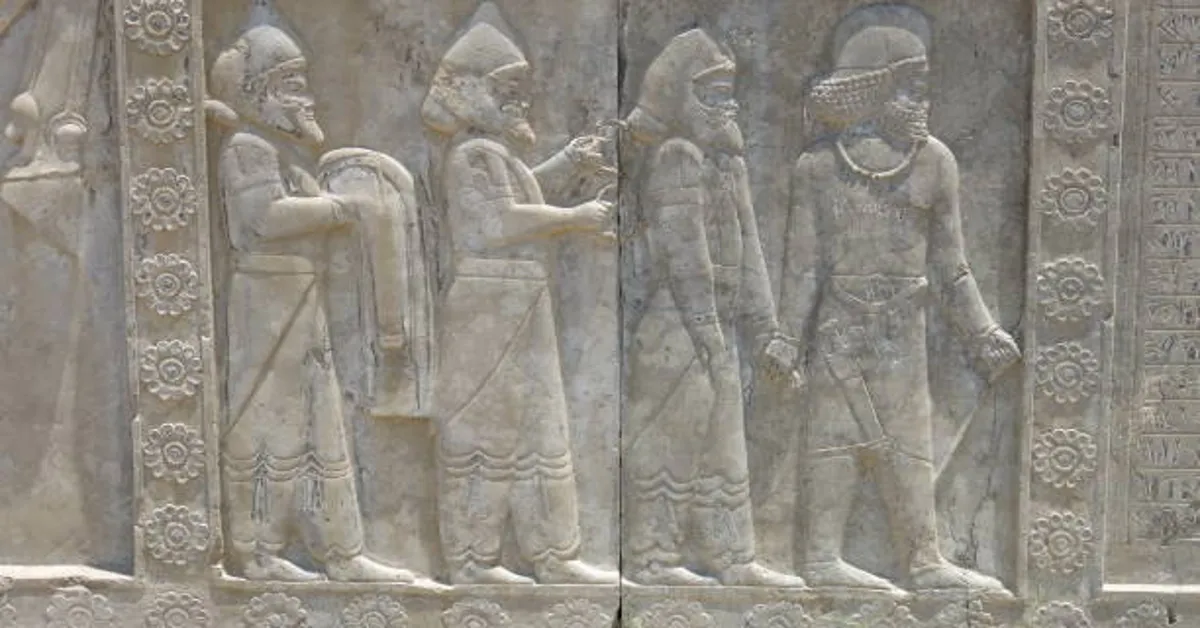
The word “Negahestan” holds deep cultural and symbolic meaning, particularly in Persian language and philosophy. On the surface, it may be interpreted simply as a place of vision, reflection, or observation. But beyond the literal translation, it resonates with themes of awareness, beauty, memory, and sacred space—both physical and mental. Understanding Negahestan requires a thoughtful exploration of its linguistic origins, historical applications, artistic interpretations, and its evolving place in modern life.
Negahestan is a term steeped in Persian heritage, combining two core concepts: “Negah” (meaning look, gaze, or observation) and the suffix “-estan” (meaning place or land). Thus, Negahestan can be understood as “the place of gazing” or “the garden of observation.” In literature and spiritual philosophy, it has also come to refer to a mental state of stillness where one pauses to reflect and gain perspective.
Whether as a metaphorical space of contemplation, a physical garden, a gallery of memories, or a gathering of thoughts, Negahestan bridges the material and the immaterial. It is both an outer and inner experience, merging aesthetics with intellect, nature with soul, and history with vision. This article will dive deep into all these dimensions of Negahestan, with the goal of painting a holistic picture of its depth, beauty, and continuing relevance.
Linguistic Roots of the Word “Negahestan”
To begin our exploration, it is essential to break down the linguistic anatomy of the word “Negahestan.” In Persian, “Negah” derives from the verb “Negah kardan,” which means “to look” or “to observe.” It does not imply a casual glance but rather a conscious, intentional act of seeing, often with deeper implications of mindfulness or emotional resonance.
The suffix “-estan” is a common Persian morphological element used to denote a place or land, much like how it functions in country names like Pakistan (land of the pure) or Afghanistan (land of Afghans). Therefore, “Negahestan” literally means the land or space of looking or observing. But just as a garden is not only a piece of land but also a curated space of beauty and life, Negahestan goes beyond just a visual field—it becomes a sanctuary of thought and emotion.
This word is rich in metaphor and allusion. In classical Persian poetry, the idea of looking or seeing often symbolizes understanding, inner wisdom, or spiritual realization. Hence, Negahestan, as the space where such gazing occurs, is viewed as sacred and transformational.
The Cultural and Historical Role of Negahestan
In Persian history and literature, Negahestan has been associated with various cultural institutions and settings that emphasize art, dialogue, and introspection. During the time of Persian empires and dynasties, spaces that encouraged discussion, artistic exchange, and contemplation were often referred to as Negahestan-like in nature, even if not in name.
For example, the famed Persian gardens—known as “Bagh”—are closely related to the concept of Negahestan. These were not just horticultural wonders but also carefully designed spaces for aesthetic pleasure, spiritual reflection, and social gatherings. The layout of these gardens, with symmetrical paths, water channels, and fragrant flowers, invited the visitor into a meditative state. In many ways, such gardens were the physical embodiment of a Negahestan—a space curated for deep looking and inner stillness.
Similarly, many schools of philosophy and mysticism held regular gatherings or salons where seekers would engage in deep dialogue. These intellectual environments were akin to mental or verbal Negahestans. The act of sitting together and contemplating life’s biggest questions in a respectful and poetic manner was itself a kind of spiritual vision—a gaze turned inward through outward conversation.
Moreover, many Persian miniature paintings depict scenes of such gardens or gatherings, filled with elegance and harmony. Artists and poets often drew inspiration from the idea of Negahestan as a metaphorical stage where human and divine vision intersected.
Negahestan in Persian Art and Aesthetics
Art in Persian culture has always had a multidimensional role—visual pleasure, storytelling, religious symbolism, and philosophical depth. The concept of Negahestan appears frequently in classical poetry, painting, calligraphy, and architecture. In each medium, it plays a distinct role.
In painting, especially miniature art, Negahestan often appears as a beautifully detailed garden or balcony, filled with symmetry and symbolism. These paintings are not meant to be passive images; they invite the viewer into a deeper state of observation. Each tree, bird, or figure in the artwork is placed with purpose, calling the observer into a mental Negahestan where thoughts bloom like flowers.
In poetry, Negahestan may be an abstract realm—a place in the heart or mind where the poet retreats to contemplate life, love, and loss. Poets like Hafez, Rumi, and Saadi often speak of such inward gardens, where wisdom ripens and silence speaks louder than words. For them, a true Negahestan was not an external building, but an inner courtyard of the soul.
Calligraphy, too, becomes a visual Negahestan. The flowing, rhythmic script of Persian letters can be likened to rivers of thought, carrying the reader toward reflection. The viewer does not merely read the content but is invited to see the spirit of the words through the motion of the pen.
Even in carpet weaving—a centuries-old craft in Iran—the concept of symmetry, pattern, and visual storytelling speaks to the principles of Negahestan. A well-designed Persian carpet is not just a floor covering; it is a garden underfoot, guiding the gaze into quiet contemplation.
The Philosophical Significance of Negahestan
Beyond the tangible and the aesthetic, Negahestan carries deep philosophical and spiritual weight. At its core, it is about mindfulness—the ability to see clearly, intentionally, and with awareness. In today’s world of distractions and speed, the concept of Negahestan reminds us of the need to slow down and see rather than merely look.
In many Eastern traditions, observation is not a passive act but a path to wisdom. In this way, Negahestan aligns with the idea of muraqaba in Sufism, which means spiritual observation or meditative watching. To sit in a state of muraqaba is to be in one’s Negahestan—present, calm, and open to inner insight.
Philosophically, Nega hestan also touches on epistemology, or the study of knowledge. How do we know what we know? Through vision—both literal and metaphorical. In this context, Nega hestan is the space where knowledge is not only acquired but seen and felt. It becomes a place of synthesis, where sensory input meets intuitive wisdom.
Psychologically, it can also be seen as the mental space we need for processing, healing, and understanding. In therapeutic terms, creating one’s own Nega hestan may involve journaling, meditating, or simply spending time in nature—any practice that centers observation and presence.
Negahestan in the Modern World
As societies evolve, the meaning and relevance of ancient concepts like Nega hestan must also adapt. But far from being obsolete, the idea of Nega hestan may be more essential now than ever before. In a time dominated by screens, noise, and information overload, creating personal and communal Nega hestans offers a powerful antidote.
In urban planning and architecture, we see efforts to build parks, green rooftops, and communal gardens—modern Nega hestans that serve as havens for mental well-being. Museums, art galleries, and libraries continue to be secular temples of observation, inviting people to step out of the rush and into a reflective space.
On a personal level, the digital age also opens new doors. Curated digital experiences, mindfulness apps, and even minimalist home design echo the spirit of Nega hestan. The goal remains the same: to create space for clarity, focus, and intentional living.
In education, we see the re-emergence of the Socratic method and contemplative pedagogy—teaching styles that emphasize deep observation, inquiry, and discussion. Classrooms that function as intellectual Negahestans produce not just informed students but thoughtful citizens.
Moreover, in mental health, the idea of “holding space” for others is a modern echo of the Nega hestan principle. Therapists, counselors, and coaches often speak of creating environments where people feel safe to explore and observe their thoughts without judgment.
Even in the world of business and innovation, there is increasing emphasis on vision—not just in the strategic sense but in the human sense. Companies now value emotional intelligence, presence, and reflective leadership. Leaders are urged to create cultures that are not just productive, but aware—a corporate Nega hestan, so to speak.
Negahestan as a Personal Practice
Each individual can cultivate their own Nega hestan. It does not require a garden or a palace. A small corner of your room, a walk in the park, a journal entry, or even a moment of silence during a busy day can become a gateway to your inner Nega hestan.
Here are some ways to practice it:
- Mindful Observation: Choose a quiet place and observe your surroundings without labeling or judging. Just notice—colors, shapes, sounds, textures.
- Visual Journaling: Combine writing and drawing to explore your inner world. Your notebook becomes a private Nega hestan.
- Meditative Reading: Read poetry or sacred texts slowly, allowing each word to unfold its meaning. Don’t rush; let the gaze linger.
- Art Appreciation: Visit a museum or gallery and spend time with a single artwork. Let your eyes travel its path slowly, soaking in its essence.
- Nature Retreats: Spend time in natural settings without your phone. Allow nature to recalibrate your gaze and your mind.
Over time, this practice of intentional observation deepens your connection with yourself, with others, and with life as a whole.
ALSO READ: Prosecchini: The Heritage, Identity, and Influence of a Distinguished Name
FAQs About Negahestan
1. Is Negahestan a real physical place or a symbolic concept?
Negahestan can be both. Historically, it referred to physical places like gardens or salons meant for contemplation. Symbolically, it represents any space—mental or physical—designed for reflection, vision, and awareness.
2. Can anyone create their own Negahestan at home?
Yes, absolutely. A quiet corner, a clean desk, or a window view can become your personal Negahestan. The key is to make it a space where you can pause, reflect, and engage in meaningful observation.
3. Is Negahestan rooted only in Persian culture?
While the term is Persian in origin, the concept is universal. Most cultures have traditions of sacred spaces or practices centered on observation and contemplation, such as Zen gardens in Japan or meditation rooms in monasteries.
4. How is Negahestan relevant in the digital age?
In a world filled with digital noise and distraction, Negahestan represents a much-needed return to stillness and presence. It can be incorporated through digital minimalism, mindful use of technology, and the creation of intentional offline moments.
5. Can Negahestan improve mental and emotional health?
Yes. By encouraging mindfulness, slowing down, and focusing attention, practicing Negahestan can reduce stress, improve focus, and enhance emotional awareness. It is a valuable mental health tool.
Conclusion
Negahestan is more than a word—it is a world unto itself. Rooted in Persian linguistic, artistic, and philosophical traditions, it invites us to live more intentionally. Whether you encounter it as a quiet garden, a piece of poetry, or a moment of stillness within your own mind, Negahestan remains a powerful reminder that seeing is more than looking—it is understanding, appreciating, and connecting.
In a time when our attention is fragmented and our souls often fatigued, the revival of Negahestan as a personal and communal practice offers a path back to wholeness. It teaches us that beauty, clarity, and wisdom are always available—but only to those who choose to see.