

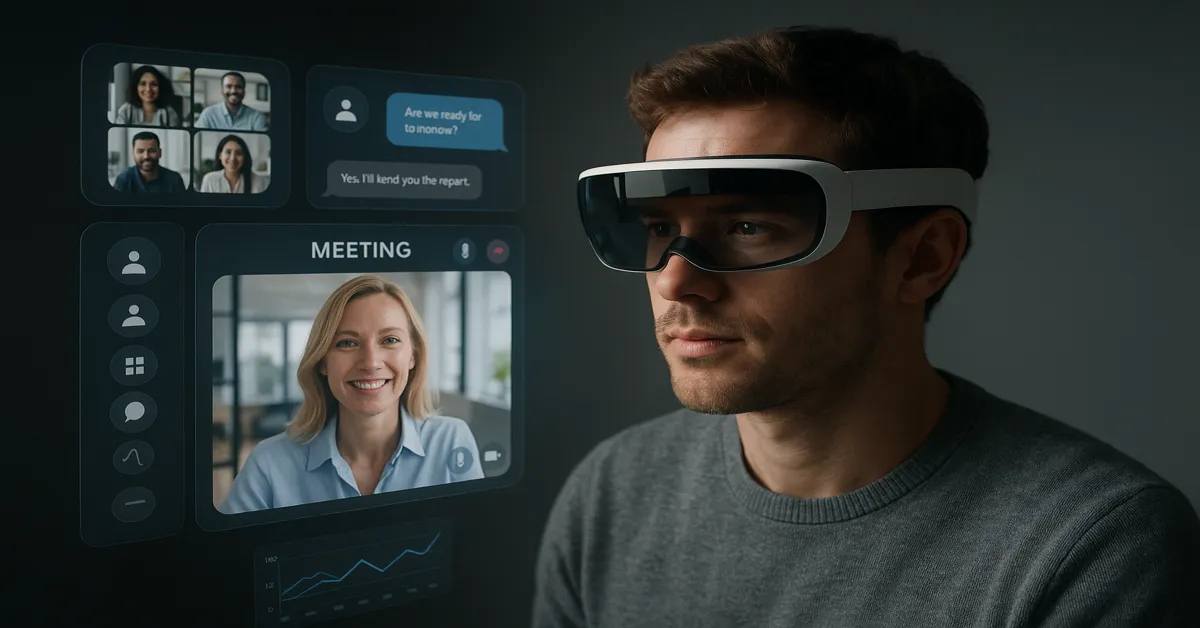
In today’s hyper-connected world, innovation drives the transformation of human interaction. From basic telephony to real-time immersive conferencing, we have witnessed a profound evolution in how people communicate, share, and collaborate. In this unfolding journey of digital communication, a new frontier is emerging — Ceıvır, a concept that embodies the next generation of communication interfaces, blending virtual reality, artificial intelligence, contextual awareness, and multi-sensory feedback into a seamless user experience.
Ceıvır is not just a platform or a tool—it is a paradigm shift. It aims to unify various modes of digital interaction into a single, intelligent interface capable of adapting to user preferences, environmental contexts, and communication demands in real-time. Imagine a system where voice, video, emotion, gesture, and even thought-based cues come together to form one coherent communicative experience. That is the promise of it.
This article explores the concept, potential applications, components, technological underpinnings, and future implications of it in our increasingly digitized world.
Understanding the Core Concept of Ceıvır
The term Ceıvır—conceptualized as a blend of “communication,” “environment,” “interface,” “virtual,” and “response”—is a futuristic vision for how humans will communicate in environments where traditional digital boundaries no longer exist. At its core, Ceıvır represents a holistic communication system that integrates all forms of human interaction into a unified, intelligent, and adaptive interface.
This concept encompasses a fully immersive virtual interface where users do not need to toggle between apps, devices, or platforms. Instead, Ceıvır functions as a layer across all communication forms, enhancing them with intelligent context, sensory adaptability, and user-centric customization. The idea is to eliminate the fragmentation of communication channels and create a fluid, uninterrupted, and emotionally rich conversation space.
Technological Foundations of Ceıvır
Ceıvır, while conceptual, is rooted in multiple rapidly advancing technologies. Let’s break down the core technological components that make the realization of Ceıvır possible:
1. Artificial Intelligence and Natural Language Understanding
At the heart of it lies powerful artificial intelligence capable of understanding, processing, and adapting to human language—both written and spoken. But it goes beyond traditional NLP. It involves emotional intelligence, semantic understanding, and situational awareness to interpret context, tone, and intention.
The AI embedded in it continuously learns user behavior, communication style, and emotional patterns to personalize every interaction. This makes conversations more natural and meaningful, especially in virtual or remote setups.
2. Augmented and Virtual Reality Integration
Ceıvır leverages AR and VR to create immersive communication environments. Whether it’s a virtual boardroom, a shared workspace, or a holographic family reunion, it generates environments that simulate physical presence, enabling participants to feel genuinely “together.”
These environments adapt based on the conversation’s tone and context—serious discussions take place in minimalistic, distraction-free rooms, while creative brainstorming sessions happen in dynamic, visually rich spaces.
3. Haptic Feedback and Sensory Integration
It introduces multi-sensory interaction. Through advanced haptic suits or wearable devices, users can experience physical sensations like handshakes, hugs, or tactile feedback during a digital interaction. This integration enhances empathy and emotional engagement, reducing the alienation often felt in digital communication.
4. Brain-Computer Interfaces (BCI)
An emerging yet crucial component of Ceıvır is BCI. With devices capable of reading brain signals, users can trigger responses, select options, or navigate conversations using thought patterns. While still in its infancy, BCI is a critical enabler for hands-free, rapid, and inclusive communication—especially for users with mobility limitations.
5. Context-Aware Computing
It continuously monitors the context of communication, including environmental noise, facial expressions, mood, location, and even physiological signals (like heart rate). This enables it to respond adaptively—switching to text if the user is in a noisy place, or softening tone when the user is stressed.
Practical Applications of Ceıvır
Ceıvır is not just a concept for future enthusiasts—it has real-world potential across diverse industries and everyday life. Here are some key areas where it could redefine communication:
1. Remote Work and Collaboration
In remote teams, it offers an interface where colleagues can brainstorm in shared virtual spaces, sketch ideas in mid-air, feel the rhythm of a conversation through haptic cues, and respond with gestures or thoughts instead of typing. This results in better team bonding, creative synergy, and productivity.
2. Education and Virtual Learning
Education through it becomes immersive and adaptive. Imagine a history class where students walk through ancient cities, interact with virtual artifacts, and debate historical events in real-time avatars. AI-powered tutors can sense confusion and offer personalized guidance on the fly.
3. Healthcare and Teletherapy
For therapists and doctors, it enables emotionally connected consultations. Virtual touch, facial mirroring, and real-time emotional analysis enhance doctor-patient trust and allow more nuanced care—especially in mental health, where subtle expressions matter.
4. Social Connectivity and Virtual Gatherings
Social interactions become more meaningful when physical distance no longer hinders emotional presence. Family dinners, friend reunions, or even dating experiences in it’s immersive environments create deeper connections by simulating real-life dynamics.
5. Accessibility and Inclusivity
Perhaps one of the most transformative aspects of Ceıvır is its inclusive design. People with disabilities can communicate effortlessly using BCIs, gesture recognition, or thought-based commands. It learns user-specific preferences and limitations, making digital spaces more accessible than ever before.
Privacy, Ethics, and Governance of Ceıvır
As with any powerful technology, Ceıvır poses significant ethical and regulatory challenges. The very features that make it revolutionary—emotion tracking, brain signal reading, real-time environment adaptation—also raise serious concerns around privacy, consent, data protection, and psychological well-being.
Governments, developers, and ethicists must collaborate to ensure:
- Transparent Data Usage: Users must know what data is collected, how it’s used, and who has access.
- Informed Consent: Participation in immersive or emotionally intensive interactions must be voluntary and informed.
- Mental Health Safeguards: While immersive tech can enhance connection, it can also cause fatigue, confusion, or emotional manipulation if misused.
- Digital Identity Security: In environments where avatars are expressive and life-like, identity fraud or impersonation can become dangerously easy.
Building ethical frameworks, digital rights charters, and global standards is essential for the responsible deployment of Ceıvır.
Barriers to Adoption and Technological Limitations
While the vision is compelling, it’s mass adoption faces notable hurdles:
- Hardware Cost and Accessibility: VR headsets, haptic devices, and BCI tools are expensive and not yet mainstream.
- Latency and Bandwidth Requirements: Real-time sensory and environmental interactions need ultra-fast internet and advanced computational power.
- Learning Curve: Users need time to adapt to immersive systems and may resist replacing familiar tools.
- Compatibility Across Platforms: Integration with existing apps, systems, and workflows requires standardization and cooperation across tech ecosystems.
However, as Moore’s Law continues to drive down hardware costs and 5G/6G networks become ubiquitous, these challenges are likely to diminish over time.
The Future Outlook: Where is Ceıvır Headed?
Looking ahead, Ceıvır is not limited to desktop screens or headsets. With the rise of ambient computing, holographic displays, wearable interfaces, and even neural implants, it could become omnipresent and invisible—integrated into our homes, vehicles, workplaces, and even clothes.
Communication will feel more like intuition—less mechanical, more emotional; less reactive, more proactive. Instead of initiating calls or scheduling meetings, Ceıvır-enabled systems might predict and prepare environments for interaction based on shared goals, upcoming tasks, or even emotional needs.
Over time, Ceıvır may evolve into a companion-like presence—guiding us, translating intent into action, and bridging emotional gaps between people across continents. It could become the operating system for human connection in the digital age.
Conclusion
Ceıvır is not just a technical innovation—it is a vision for human-centered communication. As our world becomes more digital, the quality of our interactions will determine the strength of our relationships, creativity, and emotional well-being. Ceıvır proposes a system where digital interactions can be just as rich, nuanced, and emotionally fulfilling as real-life encounters.
It’s a future that’s fast approaching—and one that demands thoughtful design, ethical foresight, and a deep understanding of what it means to truly connect.
ALSO READ: Understanding هنتاوي com: Anime, Manga, and Hentai in Arab Digital Culture
Frequently Asked Questions (FAQs)
1. What is Ceıvır?
Ceıvır is a conceptual next-generation virtual communication interface combining AI, VR, BCI, and sensory integration for seamless human interaction.
2. How does Ceıvır differ from current communication platforms?
Unlike traditional platforms, Ceıvır integrates voice, emotion, gestures, and sensory feedback into one immersive and adaptive communication experience.
3. What technologies power Ceıvır?
Ceıvır utilizes artificial intelligence, virtual/augmented reality, brain-computer interfaces, haptic feedback, and context-aware computing.
4. Can Ceıvır be used in education or therapy?
Yes, Ceıvır has vast potential in both fields by creating immersive, emotionally intelligent environments that enhance learning and therapeutic connection.
5. What are the ethical concerns related to Ceıvır?
Key concerns include data privacy, emotional manipulation, identity fraud, and ensuring user consent in immersive, emotionally sensitive environments.